You Built Projects. Now Make Your First Dollar
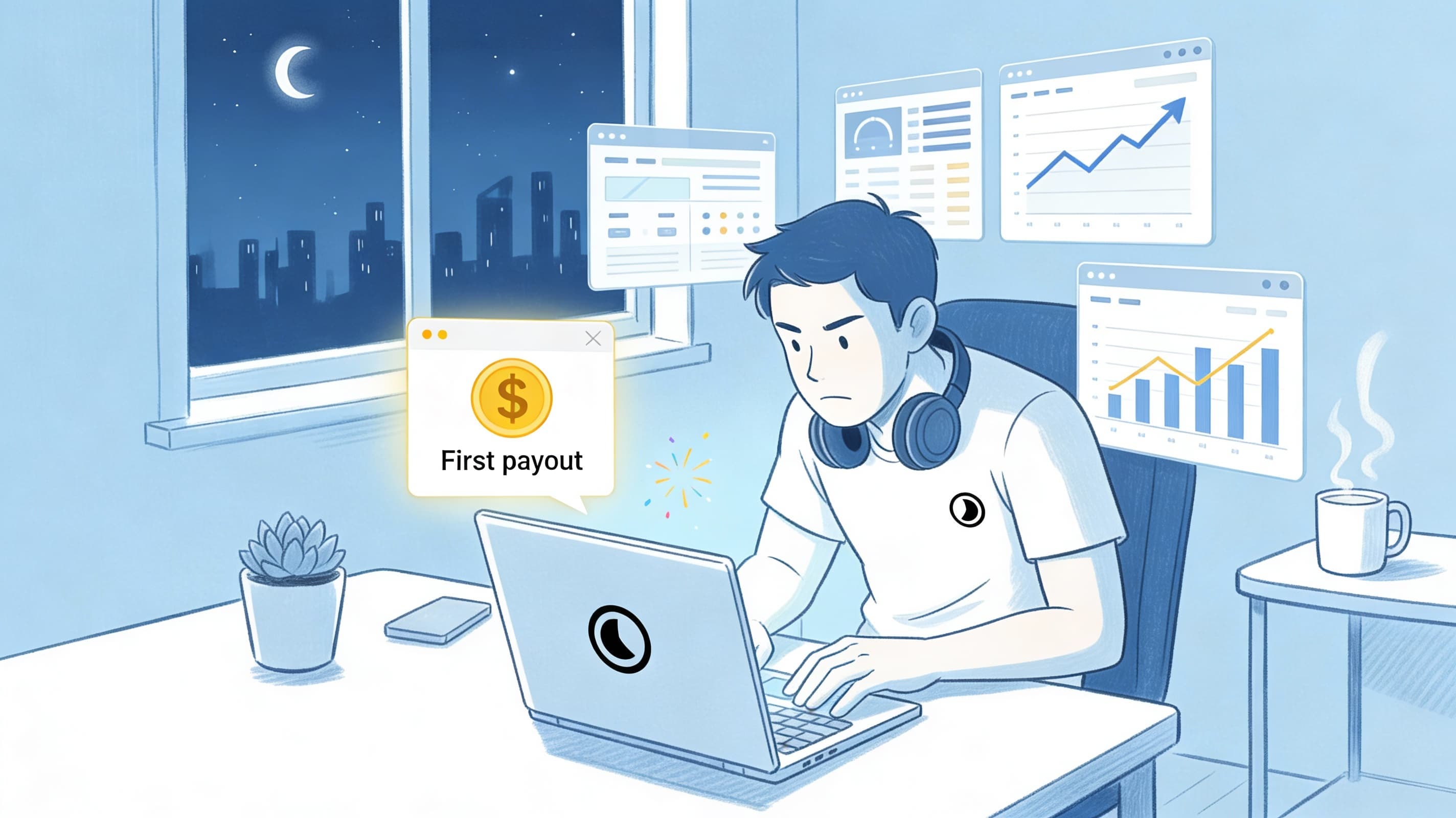
You've built projects. You have a GitHub full of repos. But you haven't made a single dollar from your code.
I was there. I spent months building "cool projects" that nobody used and nobody paid for. Then I changed my approach—I stopped overthinking and started shipping.
This is the story of how I made my first ₹725.57 ($8.60) with BruhGrow Tools.
The idea: BruhGrow Tools (.fun domain?)
I had this idea: build a collection of productivity tools for developers and content creators. Simple utilities that solve everyday problems.
But here's the thing—I gave it a Gen Z name: BruhGrow. Not exactly the most professional-sounding name for developer tools, right? And I initially bought a .fun domain because it was cheap and matched the vibe.
My brother saw it and said, "Dude, if you want people to take this seriously, get a .com domain." He was right. I grabbed bruhgrow.com and the perception changed immediately. People took it more seriously with a .com extension.
Looking back, the name was still unconventional for marketing. Nobody searches for "BruhGrow." But the .com domain made it feel more legitimate.
The stack: Next.js, TypeScript, TailwindCSS, Supabase (database), Gemini API
The cost: Domain ($5-6 from Spaceship) + hosting (free on Vercel)
The deployment: GitHub + Vercel (push to main = auto deploy)
The features: 20+ tools (image compressor, code formatter, color palette generator, post enhancer, YouTube thumbnail downloader, and more)
Launch day: Share everywhere
I didn't have a marketing strategy. I just shared it everywhere I could think of:
- Peerlist - Got featured and received great feedback
- Reddit - Posted in r/SideProject, r/webdev, r/Entrepreneur
- Twitter/X - Tweeted about it with screenshots
- LinkedIn - Shared the journey
- Threads - Posted updates
- YouTube - Commented on relevant videos
- Telegram - Developer groups
- Hacker News - Submitted but didn't get much traction
- Product Hunt - Planned for later
Honestly, I lost count of how many places I posted. Every platform I could think of, I was there.
People actually loved it
The response was surprising. People started using it. They left comments like:
"This is actually really useful! Bookmarked."
"Finally, a simple tool that just works."
"Love the UI, super clean."
But loving it and paying for it? Two different things.
The monetization strategy
Here's the thing—I didn't ask users what they'd pay for. I just looked at my costs.
Problem: AI-powered tools (post enhancer, image generator, etc.) were eating my Gemini API credits.
Solution: Put AI tools behind a sign-in wall. Not even paid—just sign in.
Why? Because it:
- Reduced random abuse of my API
- Got me 500+ email signups
- Let me track who's actually using what
- Built a list I could convert later
The free tools (icon library, color palette, etc.) stayed completely open. No sign-in, no friction. Just use it.
The one premium tool: $7
I didn't create a full "Pro plan." I kept it simple:
One premium tool. $7 one-time payment.
Most tools? Free.
AI-powered tools? Sign in (free).
One specific tool? Pay $7.
Why this worked:
- People could try 20+ tools for free first
- The icon library (most popular) was completely free—no paywall
- Once they trusted the quality, $7 felt like nothing
- No subscription anxiety—just pay once, use forever
The first sale: $7
I set up DoDo Payment (super easy integration, way simpler than Stripe for Indian payments). Added a simple "Unlock Premium Tool - $7" button.
No big launch. No announcement. Just... there.
A week later: I got a notification.
$7 payment received.
Someone who signed up 3 days ago came back and paid for the premium tool.
I stared at my phone. Someone actually paid money for something I built.
That $7 = ₹580. Not life-changing money. But it proved something critical: free tools → trust → paid conversion.
What I learned from real users
After getting that first payment, I checked their usage history.
They had:
- Used 3 free tools over 2 days
- Signed in to access an AI tool
- Came back the next day
- Paid $7 for the premium tool
The pattern: People don't pay on first visit. They pay after they trust you.
My funnel:
- 500+ signups (free AI tools)
- Weekly purchases ($7 premium tool)
- 10-15 paying customers so far
- Still learning, still iterating
The marketing grind
Here's what actually worked:
✅ What worked:
- SEO: Wrote blog posts like "Free Image Compressor Online" - ranked on Google
- Reddit: Genuine participation in communities, not just self-promo
- Twitter threads: Shared my building journey, got retweeted
- LinkedIn posts: Professional audience actually converted better
- YouTube comments: Helped people in comments, casually mentioned my tool
❌ What didn't work:
- Hacker News (barely any upvotes)
- Cold DMs (felt spammy, nobody responded)
- Facebook groups (got flagged as spam)
- Mass posting without engagement
The real lesson: Ship first, learn later
I learned more in the 30 days after launch than in the 60 days I spent building.
While building: I worried about perfect code, scalability, edge cases, design consistency.
After launching: I learned what features people actually wanted, what UI confused them, what pricing they'd accept, what marketing channels worked.
The truth: You don't know what you don't know until real users touch your product.
The post-launch improvements
After that first sale, I:
- Added the top 5 requested features in 2 weeks
- Improved SEO - wrote targeted blog posts
- Doubled down on Reddit & LinkedIn - my best traffic sources
- Created a simple roadmap - showed users what's coming
- Launched on Product Hunt - got 22 upvotes but more users
Results so far:
- 500+ signups (AI tools behind sign-in)
- 10-15 paid customers ($7 each)
- Total revenue: ~$100-150
- Sales pattern: Someone pays almost every week
Not making $1,000/month. Not quitting my job. But proof that this can work.
I'm still learning. Still tweaking. Still figuring out what converts better.
Your action plan
Here's what you should do:
Week 1: Ship something
- Build ONE tool that solves ONE problem
- Don't overthink the name or domain
- Don't wait for perfection
- Launch publicly
Week 2: Share everywhere
- Reddit, Twitter, LinkedIn, Peerlist, Telegram
- Don't spam - participate genuinely
- Share your building journey, not just the product
- Respond to every comment
Week 3: Add sign-in (for AI tools)
- Put expensive API tools behind a sign-in wall
- Keep the most popular tools free (no login needed)
- This builds trust AND saves you money
- Goal: 100+ signups in the first month
Week 4: Add ONE premium tool
- Pick ONE tool to charge for ($5-10 one-time)
- Use local payment gateways (DoDo Payment for India—easiest integration I've found, Gumroad globally)
- Make the button visible but not pushy
- Don't expect instant sales—let people trust you first
Common mistakes I made (so you don't have to)
Mistake 1: Caring too much about the name
Reality: Nobody cares. They care if it works.
Mistake 2: Building for months before launching
Reality: Ship fast, improve based on real feedback
Mistake 3: Posting once and giving up
Reality: Marketing is consistent sharing, not one viral post
Mistake 4: Not asking for money early enough
Reality: If people love it, they'll pay. Ask.
Tools I used (the real stack)
- Building: Next.js, TypeScript, TailwindCSS
- Database: Supabase (free tier - 500MB, perfect for starting)
- Hosting: Vercel (free tier - unlimited deploys)
- Domain: Spaceship ($5-6, cheapest I found)
- Payments: DoDo Payment (India - super easy setup)
- Deployment: GitHub (free) → Vercel (auto-deploy on push)
- Analytics: Umami (free - self-hosted)
- Email: Gmail (yes, really)
- Marketing: Free - just my time
Total monthly cost: $0 (100% free)
Total setup cost: $5-6 (domain only)
The BruhGrow name problem
Remember how I said the name was bad for marketing? It was. But I didn't let it stop me.
The lesson: A mediocre name with a shipped product beats a perfect name with no product.
Would I rename it? Maybe. But not before validating that people want it first.
What's next
I'm still running BruhGrow Tools. I'm not making thousands yet—just $7 here and there, almost weekly.
But here's what I've proven:
- You don't need a perfect idea
- You don't need a big audience (500+ signups is enough to start)
- You don't need VC funding
- You just need to ship and learn
I'm still learning. Still experimenting. Still figuring out:
- Which tools people actually pay for
- What price point converts best
- How to turn signups into customers
My next goal: Make this consistent. $100/week. Then $500/week. Same approach—build, ship, learn, improve.
Final thoughts
That first $7 changed my mindset completely. It proved that:
- Code you write has value
- People will pay if you build trust first
- You don't need to be a senior developer
- Free tools → signups → trust → sales
The difference between $0 and $7 is massive. After that, it's just learning and iterating.
This isn't a "I made $10K in 30 days" story. This is a "I'm still figuring it out" story.
I'm not an expert. I'm just showing you that:
- 500+ signups is achievable
- Weekly sales are possible
- You can start with free tools and convert later
- You don't need to have it all figured out
Your turn: Stop overthinking. Build something small this weekend. Ship it on Monday. Make some tools free, put one behind a small paywall. Get your first 100 signups. See what happens.
That's how you make your first dollar.
P.S. BruhGrow Tools is still live at bruhgrow.com. Still learning. Still iterating. Still getting weekly sales. And yeah, I kept the weird name.
What People Are Saying
"Loved reading this. Super inspiring and genuinely insightful."
— Merajul Haque
"Great article, brother! A pleasant read. I like your writing style; it reminded me a bit about how to do better marketing. Keep it up, brother, the article is really good."
— Jawuil Pineda
"Loved the honesty and openness in this post. Thanks for sharing the real experience, and best of luck moving forward!"
— Aykut Önen