How I Earned $1,000 in 18 Hours
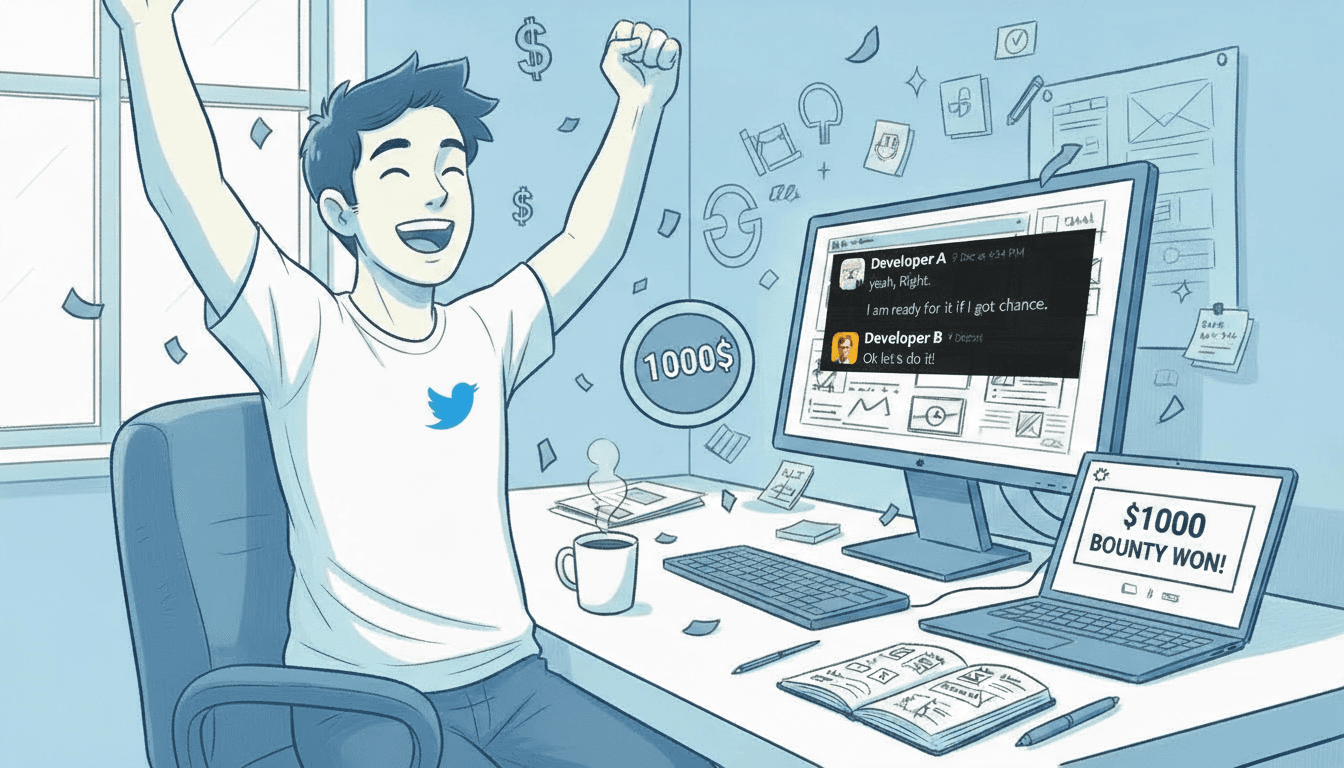
Two days. $1,000. One bounty tweet.
This isn't clickbait. This actually happened. And if you're a developer sitting on the sidelines of tech Twitter thinking "maybe someday," this is your wake-up call.
The Tweet That Changed My Week
I was scrolling Twitter (doing the usual procrastination dance developers do) when I saw it:
"🚨 Offering $1,000 Bounty to Rebuild This App in Next.js + shadcn/ui" - @illyism
Most people liked and scrolled. I replied: "I am ready for this."
I started work on December 11th evening. By December 14th morning, it was done.
Why I Actually Won This
Let me be real with you—I wasn't the most experienced developer. I didn't have the biggest portfolio. But I had something better:
I showed up.
While others were thinking "should I?", I was already saying "I will."
That's it. That's the secret. Stop overthinking. Start shipping.
The Project: Reddit Music Player
The task was to rewrite Ilias's old CoffeeScript project using modern tech:
- From: CoffeeScript (yeah, that old)
- To: Next.js 16 (App Router) + shadcn/ui
Sounds simple, right? Wrong.
The Real Challenge: My 6-Hour Mistake
Here's what actually happened (and nobody tells you this part):
I thought I'd be smart. I used Cursor to convert the entire CoffeeScript app to Next.js in one go.
Bad idea.
The app became incredibly laggy. Everything was converted, but nothing worked properly. I had wasted 6 hours chasing the wrong approach.
The wake-up call: You can't just auto-convert legacy code and expect it to work. CoffeeScript isn't just different syntax—it's a different way of thinking.
So I stopped, took a breath, and started over the right way:
- Created my own folder structure - Clean, organized, Next.js-optimized
- Converted each file using Cursor Composer - Used the best model in Cursor (Composer 1) to convert each file properly, understanding the logic instead of just translating syntax
- Removed unnecessary files - Next.js is powerful enough to replace a lot of legacy patterns
The old codebase had Pug templates, complex CoffeeScript classes, and years of accumulated cruft. I rebuilt it piece by piece, keeping what mattered and modernizing everything else.
What I Actually Learned (The Good Stuff)
1. Next.js SSR is Powerful (When You Use It Right)
I went deep into Server-Side Rendering. Like, really deep.
The old app was client-heavy. Everything loaded on the browser. Slow. Janky.
I rewrote it with Next.js App Router:
- Server Components for static content
- Client Components only where needed
- Streaming for faster loads
Result: The app felt 3x faster.
2. Smart Folder Structure Saves Time
After my Cursor experiment failed, I realized something crucial:
Good architecture beats quick conversions.
I created a clean folder structure from scratch:
- Separated concerns properly
- Used Next.js App Router conventions
- Made components reusable and maintainable
This took longer upfront but saved me from debugging hell later.
3. Late Nights Are Part of the Game
I'm not going to romanticize it—I worked late. Really late.
December 11th: Started in the evening, worked through the night.
December 12th-13th: Multiple all-nighters, converting files, debugging.
December 14th: Final touches in the morning, submitted.
Was it worth it? Absolutely.
The Tech Stack I Used
Frontend:
- Next.js 16 (App Router)
- React Server Components
- shadcn/ui for components
- TailwindCSS for styling
Why This Stack?
- Next.js App Router = SSR + Performance
- shadcn/ui = Beautiful components without bloat
- TailwindCSS = Fast styling without fighting CSS
Deployment:
- GitHub for version control
- Vercel for hosting (obviously)
The Lesson: Stay Active on Social Media & Keep Your Portfolio Clean
Here's the thing nobody tells you: opportunities don't come from job boards.
They come from:
- Being active on social media (Twitter, LinkedIn, YouTube—wherever your audience is)
- Sharing your work publicly
- Engaging with interesting content
- Building in public
I didn't have a massive following. I just showed up consistently.
And when that bounty tweet appeared, I was there. Ready.
Keep your portfolio updated and clean. You never know when someone will check it. Need inspiration? Check out buildyours.xyz for portfolio ideas.
It doesn't matter if someone watches your YouTube video or sees your tweet—what matters is that you're visible and your work speaks for itself.
My New Strategy (And You Should Copy It)
I realized something after this: waiting for opportunities is dumb.
Here's my new approach:
- Build Projects → Ship real things people can use
- Write Blogs → Share what you learn (like this)
- Be Active on Social Media → Engage with the tech community everywhere
- Take Freelance Work → Don't wait for "the perfect job"
- Repeat
This isn't a side hustle. This is how you build a career in 2025.
The Numbers (Because Everyone Asks)
Time Invested: ~18 hours over 3 days
Earnings: $1,000
Hourly Rate: ~$55/hour
Not bad for a project that taught me more than any tutorial ever could.
What You Should Do Right Now
Stop reading. Seriously.
Here's your action plan:
- Follow interesting developers on Twitter → Start engaging
- Set up Twitter alerts for "bounty" or "freelance" → Don't miss opportunities
- Build something today → Doesn't matter how small
- Share your progress → Tweet about it
- Reply to opportunities → Be the person who says "I'm ready"
The Truth About "Overnight Success"
People will look at this and think I got lucky.
But here's what they don't see:
- Months of building projects nobody used
- Hours spent learning Next.js, React, TypeScript
- Late nights debugging code
- Failed projects that never launched
The bounty didn't make me skilled. It just rewarded the skills I'd already built.
Final Thoughts
I'm not special. I'm just a developer who:
- Stays active on social media
- Isn't afraid to say "I can do this"
- Works late when needed
- Keeps learning
You can do the same. The opportunities are there. You just have to show up.
Next time you see a bounty tweet, don't just like it. Reply. Build. Ship.
Your $1,000 is waiting.
Update: The project is live. The client is happy. And I have a new project to add to my portfolio.
Now go build something.